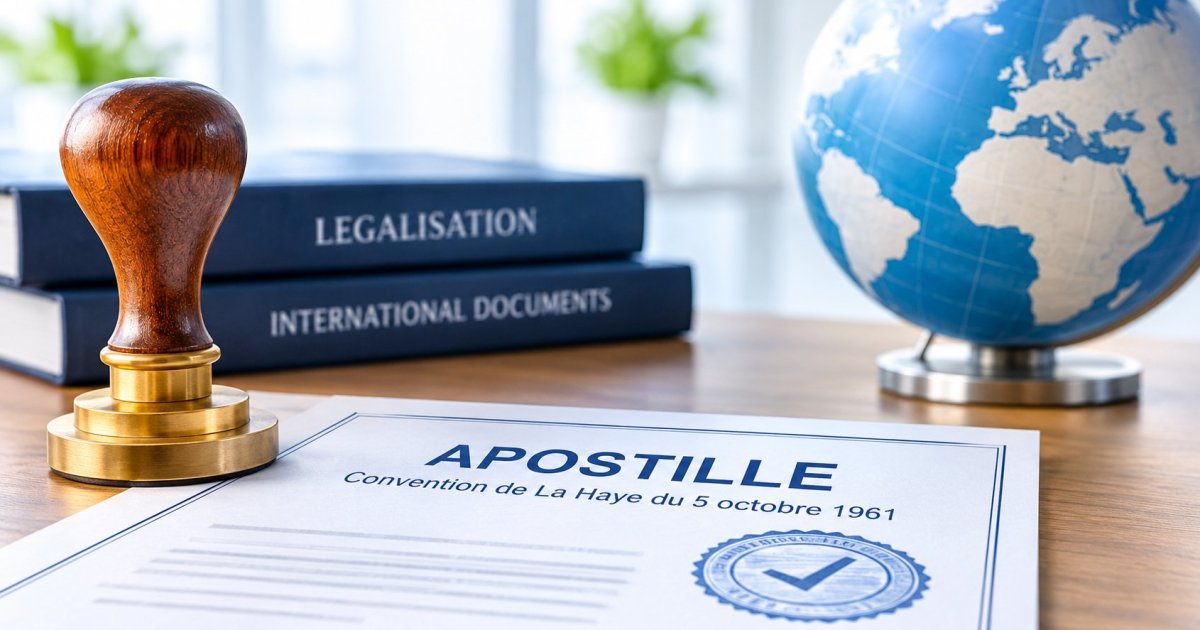
If you need an apostille service in London to prepare UK documents for use overseas, Romo Translations is here to help make the process straightforward and stress-free.
Whether you are dealing with an embassy requirement, preparing documents for business abroad or arranging personal paperwork for use in another country, obtaining an apostille can involve several steps.
We can guide you through the process, help establish what your documents need and arrange the appropriate steps towards legalisation by the UK Foreign, Commonwealth & Development Office (FCDO).
What Is an Apostille and Why Might You Need One?
An apostille is an official certificate issued by the FCDO's Legalisation Office. It confirms the authenticity of a signature, stamp or seal on a UK document so that it can be recognised by an authority in another country. It does not certify the contents of the document itself.
You may be asked to obtain an apostille when submitting UK documents to a foreign embassy, government department, court, university or other organisation. This requirement often arises when documents need to be formally recognised for legal, educational, commercial or personal purposes.
Examples of documents that may require an apostille include:
- Birth, marriage and death certificates.
- Academic qualifications and educational certificates.
- Powers of attorney, affidavits and other legal documents.
- Company documents and certificates issued by Companies House.
- Certain medical certificates and official records.
- Certified copies of passports and other personal documents.
The precise requirements depend on the document and the country where it will be used. Some documents can be submitted in their original form, while others must first be certified by a solicitor or authenticated by a notary public.
If an embassy has asked you to provide an apostille, it is worth checking its requirements before starting the application. Getting this stage right can help avoid unnecessary delays and additional costs.
Why Is an Apostille Required by Embassies?
When an organisation overseas receives a document issued in the UK, it may need assurance that the signature, stamp or seal is genuine. An apostille provides an internationally recognised method of verifying these details.
The system operates under the 1961 Hague Apostille Convention, which simplifies the legalisation of public documents between participating countries. Where the Convention applies, an apostille can replace the need for further diplomatic or consular legalisation.
However, not every country follows the same process. If the destination country is not covered by the Convention for the document concerned, additional legalisation may be required.
This can include obtaining an apostille first, having the document legalised by the relevant embassy in London and completing further formalities in the destination country.
This is why choosing the right apostille service in London can be so helpful. Understanding what the receiving authority requires before documents are submitted can make the process more manageable and help reduce the risk of having to start again.
How Does the UK Apostille Process Work?
Although the process may initially seem complicated, it becomes easier to navigate when each stage is understood. The steps will depend on the type of document, the destination country and the requirements of the organisation requesting it.
1. Check the Document Requirements
The first step is to establish exactly what needs to be legalised. The FCDO can legalise eligible UK documents, including certain official records and documents signed or certified by recognised UK public officials.
Before proceeding, check whether the receiving authority requires an original document, a certified copy or a document signed by a solicitor or notary public. You should also confirm whether a paper-based apostille or an electronic apostille (e-Apostille) will be accepted.
2. Arrange Any Necessary Certification or Notarisation
Some documents can go directly to the FCDO, while others require an additional step before they can be legalised.
For example, a power of attorney, a contract or an educational certificate may need certification by a UK solicitor or notary public. The appropriate route depends on the document and the requirements of the receiving authority.
We can help you understand which preliminary steps may be necessary and identify what needs to be in place before the application proceeds.
3. Submit the Documents for FCDO Legalisation
Once the documents are ready, an application is made through the official FCDO Legalisation Office service. The relevant documents must then be submitted in accordance with the instructions provided.
The Legalisation Office checks whether the signatures, stamps or seals match its records. If the checks are successful, it attaches the apostille to the document or issues the appropriate electronic certificate.
4. Arrange Any Further Embassy Legalisation
Depending on the destination country, the apostille may complete the process. In other cases, the document may also need to be presented to the relevant embassy in London or undergo additional approval overseas.
It is important to confirm these requirements before submitting your documents, particularly if you are working towards a deadline.
5. Receive Your Legalised Documents
Once the process is complete, the legalised documents can be returned by the relevant delivery method or, where an e-Apostille is used, made available electronically.
Your documents can then be provided to the embassy or other organisation requesting them, subject to any additional requirements they have specified.
How Romo Translations Can Help With Your Apostille Service in London
At Romo Translations, we understand that legalising documents for use overseas can feel confusing, especially when you are unfamiliar with the terminology, procedures and different authorities involved.
Our apostille service in London is designed to make the experience easier to manage. We can help you establish what your documents may require, identify whether certification or notarisation is needed and guide you through the relevant stages of the process.
Our service includes:
- Practical guidance: Helping you understand the steps involved in obtaining an apostille and what may be required for your particular documents.
- Document preparation support: Helping establish whether your paperwork is ready for submission or whether further certification or notarisation may be necessary.
- A service tailored to your requirements: Recognising that different documents, destination countries and embassies can have different requirements.
- Support with time-sensitive requests: Helping you identify the appropriate route and available processing options, with turnaround dependent on the requirements and availability of the relevant authorities.
- Translation services: Where a document must also be translated, we can discuss the translation requirements and how these can be coordinated with the legalisation process.
We aim to take the uncertainty out of the process by helping you understand what needs to happen and in what order. Rather than trying to navigate unfamiliar procedures alone, you have a point of contact who can help you work through the practicalities.
How Long Does It Take to Obtain an Apostille?
Processing times depend on the service selected, the type of document and whether any additional checks are necessary.
The FCDO's published guidance currently states that its standard paper-based service usually takes up to 25 working days, plus delivery time. Its e-Apostille service can take up to two working days, where the document is eligible. Next-day and restricted urgent paper-based services are available only to qualifying registered businesses, with the urgent service requiring prior approval.
These are FCDO processing estimates rather than guaranteed completion dates. Additional verification may take longer, and any certification, embassy legalisation or overseas approval can add further time.
If you have an appointment, submission deadline or planned travel date, let us know at the outset. We can help you understand the steps involved and discuss the available options, although we cannot guarantee the processing time of government departments or embassies.
A Straightforward, Supportive Apostille Service in London
Whether you need an apostille for a personal document, a legal matter, an academic qualification or commercial paperwork, getting the correct process in place from the beginning can save time and unnecessary complications.
We provide a friendly, professional point of contact for people who need help navigating the UK apostille and document legalisation process. We will help you understand the requirements, work through the practical steps and identify any translation support you may need along the way.
Need an apostille service in London? Contact Romo Translations on 0203 696 8680 to discuss your documents and find out how we can help you move forward with confidence.
Frequently Asked Questions About Apostille Services in London
1. Where can I get an apostille in London?
Romo Translations can help you navigate the process of obtaining an apostille for eligible UK documents. The apostille itself is issued by the FCDO Legalisation Office, and applications are made through the official GOV.UK legalisation service.
2. What documents can be apostilled in the UK?
Eligible documents include certain birth, marriage and death certificates, court documents, company records, medical certificates and documents certified by a UK solicitor or notary public. The requirements depend on the document, so check with the receiving embassy or authority before applying.
3. Does an apostille need to be obtained before visiting an embassy?
This depends on the destination country and its legalisation requirements. Some countries accept an apostille as sufficient confirmation, while others may require additional embassy legalisation. Always check the receiving authority's instructions before proceeding.
4. How long does an apostille take in the UK?
The FCDO states that standard paper-based legalisation usually takes up to 25 working days, plus delivery time. An eligible e-Apostille can take up to two working days. Processing times can change, so check the official FCDO guidance before applying.
5. Can Romo Translations help if I need an apostille urgently?
Yes, we can discuss your deadline and help you understand the available options. However, processing times depend on the FCDO, document requirements and any additional embassy procedures. The FCDO's next-day and restricted urgent paper-based services are subject to eligibility and, where applicable, prior approval.
6. Do I need a solicitor or notary public before obtaining an apostille?
Not always. Some official UK documents can be submitted directly, while others need to be certified or notarised first. The correct procedure depends on the document and the requirements of the authority receiving it.
7. What is the difference between an apostille and notarisation?
Notarisation involves a notary public performing a relevant notarial act, such as witnessing a signature or certifying a document. An apostille is issued by the FCDO to verify the authenticity of a qualifying signature, stamp or seal. Notarisation may be required before a document can be apostilled.
8. Can I obtain an apostille for a translated document?
This depends on how the translation has been prepared and the requirements of the receiving authority. A translated document may need certification or notarisation before it can be legalised. We can discuss the translation and legalisation requirements with you.
9. What is an e-Apostille, and can I use one for my documents?
An e-Apostille is an electronic version of an apostille. It is available for eligible documents that meet the FCDO's requirements, including electronically signed PDFs certified by a UK solicitor or notary. Some document types, including birth and marriage certificates issued by the General Register Office, are not eligible. Check that the receiving authority accepts an e-Apostille before applying.
10. Can Romo Translations arrange an apostille for business documents?
We can help you understand the steps involved in legalising eligible UK business documents and identify whether additional certification or notarisation may be needed. The exact process will depend on the document and the overseas organisation requesting it.
11. How do I arrange an apostille service with Romo Translations in London?
Call Romo Translations on 0203 696 8680 to discuss your requirements. Tell us which documents you need to legalise, which country they will be used in and whether an embassy or other authority has provided specific instructions. We can then help you understand the next steps and any translation support that may be required.